DIRECT ANSWERS · REAL NUMBERS · NO GATED DOWNLOADS
Frequently Asked Questions
Most of these get asked on the phone. Here they are in writing, with the numbers attached.
Prices are 2026 Northern California, fabrication only, from our published guide. Where an answer depends on your site, it says so instead of guessing.
Jump to: Pricing and quotes · Installation and scheduling · Fabrication and materials · Compliance and safety · Service area and maintenance · Working with us
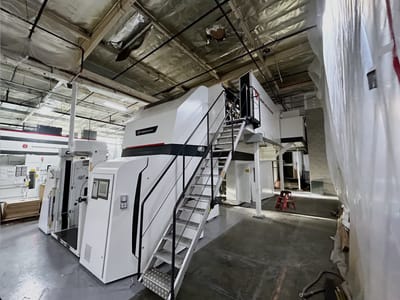
OEM EQUIPMENT INSTALL — ACCESS STAIR AND PLATFORMMANUFACTURING · LIVE PLANT · DWG PRJ-01 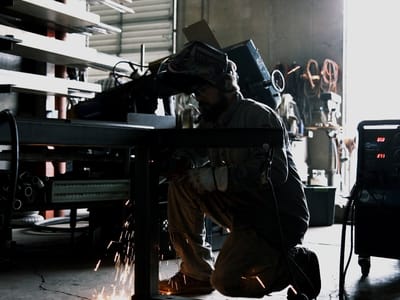
SHOP — GENERAL VIEW


Divisions
Related services
Industrial Equipment Installation and Integration
Industrial equipment installation inside live plants. Structural supports, rigging, utility tie-ins, and commissioning support. 600 miles from Sacramento.
Structural Steel Fabrication and Erection
Structural and miscellaneous steel fabrication in Rancho Cordova. Platforms, mezzanines, supports, and access systems. Engineers on staff who stamp.
Products
Related fabrication products
Steel Handrails, Guardrails, and ADA Rails
Steel handrail $140-185/LF, 42-inch OSHA guardrail $165-225/LF, ADA rail $180-240/LF. Fabricated in Rancho Cordova, stamped and permitted when required.
Steel Mezzanines: Light Duty and Heavy Industrial
Light duty mezzanines $18,000-35,000, heavy industrial $35,000-75,000+. Designed, stamped, permitted, fabricated, and installed by one shop in Sacramento.
Pricing
Published 2026 budget pricing
Miller 3 Engineering publishes budget ranges instead of hiding them. Guardrail runs $165 to $225 per linear foot, a light-duty mezzanine runs $18,000 to $35,000, and a 20 to 30 foot fixed ladder runs $3,500 to $7,500, in 2026 Northern California, fabrication only.
| Item | 2026 budget range |
|---|---|
| Standard steel handrail, 2-line | $140 – $185 per linear foot |
| Guardrail system, 42" OSHA | $165 – $225 per linear foot |
| ADA compliant rail | $180 – $240 per linear foot |
| Fixed ladder, 20–30 ft | $3,500 – $7,500 |
| Steel framed roof access hatch | $3,500 – $8,000 |
| Light duty mezzanine | $18,000 – $35,000 |
| Heavy industrial mezzanine | $35,000 – $75,000+ |
| Standard steel | $450 – $850 each |
Budget pricing · 2026 Northern California · Not a quote — Fabrication only. Installation available after site visit and field review.
Coverage
- 600 mi
- Field services, installation, fabrication delivery, and rigging from Sacramento
- 300 mi
- Full EPC delivery and preventative-maintenance programs
- Nationwide
- Engineering, design, and fabrication for shipment
Pricing and quotes
What does a steel mezzanine cost?
A light-duty steel mezzanine for storage and light equipment loads runs $18,000 – $35,000. A heavy industrial mezzanine sized for equipment loads, forklift traffic, or a process floor runs $35,000 – $75,000 and up. Those are 2026 Northern California budget ranges for the structure only, fabrication rather than installation. What moves the number is the load case, the column grid you can live with, the deck type, and the stair and guardrail scope.
What does commercial handrail cost per linear foot?
A standard 2-line steel handrail runs $140 – $185 per linear foot to fabricate. A 42-inch OSHA guardrail system runs $165 – $225 per linear foot. An ADA compliant rail, which needs a continuous graspable profile plus code-compliant returns and extensions, runs $180 – $240 per linear foot. Decorative banisters run $200 – $300. Fabrication only, installation quoted after a site visit.
What does a fixed industrial ladder cost?
A steel fixed ladder in the 20–30 foot range costs $3,500 – $7,500 to fabricate. A steel-framed roof access hatch to pair with it runs $3,500 – $8,000. The variables are height, whether a cage, well, or ladder safety system is required, the landing and platform configuration, and the finish.
What does a steel trash enclosure cost?
A single-dumpster enclosure runs $4,500 – $7,500. A double-dumpster enclosure runs $7,500 – $14,000. Mechanical and generator enclosures run $8,000 – $25,000 and up depending on the equipment being screened and the clearances it needs. Most municipalities publish a required detail that dictates dimensions, gate swing, and bollard placement, so the local standard often drives more of the price than the finish does.
What do steel bollards cost?
Standard steel pipe bollards cost $450 – $850 each to fabricate. Decorative and architectural bollards run $950 – $2,500 each. Removable or locking bollards, used for fire lanes and controlled access, run $1,500 – $3,500 each. Installation is quoted after a site visit because the cost is driven almost entirely by what is under the slab. Core drilling into an existing slab with unknown utilities costs meaningfully more than setting bollards in new construction.
What does a custom driveway gate cost?
A residential sliding gate runs $12,000 – $25,000. A commercial gate runs $25,000 – $60,000 and up. A heavy industrial gate starts at $60,000. Automation hardware is excluded unless specified, so operators, loop detectors, safety edges, and access control are a separate line. Span, wind load, whether it slides or swings, and the finish are the main drivers.
What does a steel balcony or deck structure cost?
A residential balcony structure runs $12,000 – $25,000. A commercial deck frame runs $25,000 – $75,000 and up. Both are steel structure only. Decking, waterproofing, railing, and finishes are separate scopes, and railing typically adds $140 – $240 per linear foot depending on whether it is standard, OSHA guardrail, or ADA-compliant.
What do laser-cut panels and privacy screens cost?
Laser-cut decorative panels run $55 – $95 per square foot. Privacy screens run $75 – $120 per square foot. Pattern density is the main driver, because more cutting means more machine time and a weaker panel that may need a heavier gauge or a frame. Material and finish are the other two variables.
What is excluded from a fabrication-only price?
Fabrication-only pricing covers engineering, materials, shop labor, and the finish on the steel itself. It does not include installation, site preparation, concrete or footings, electrical or automation hardware, permits and plan-check fees, crane or rigging time, decking or infill materials, or freight beyond the standard delivery area. Installation is quoted after a site visit and field review because the site drives that number far more than the part does.
How do I budget a project before I get quotes?
Start from the published ranges, then add the scopes fabrication pricing excludes. Worked example: a 1,000 square foot light-duty mezzanine with 60 linear feet of 42-inch OSHA guardrail budgets at roughly $18,000 – $35,000 for the structure plus $9,900 – $13,500 for the guardrail, which is 60 feet at $165 – $225. That is $27,900 – $48,500 fabricated. Then add installation, footings or slab work, permits and plan check, deck material, and any fire protection.
Why do so few fabricators publish prices?
Because almost every fabrication job is genuinely custom, and publishing a number invites a comparison the shop cannot control. The tradeoff is that a facility engineer trying to build a capital request has to collect three quotes before learning whether the project is a $20,000 problem or a $70,000 one. We publish the ranges for that reason. They are wide on purpose, they cover fabrication only, and they are meant for scoping rather than contracting.
Are the published prices current?
The guide is dated 2026 and reflects Northern California standard fabrication costs. Miller 3 Engineering reserves the right to adjust pricing based on market steel fluctuations and labor conditions. Steel is a commodity and it moves. Treat the ranges as budget figures for planning, and get a written quote before committing a number to a purchase order.
Installation and scheduling
Can equipment be installed without shutting the plant down?
Usually, if the work is sequenced around production rather than requiring one long window. The pattern that works: prefabricate the structural, platform, and access steel off site while the line runs, stage materials during production, make the cutover during a planned short window, then commission. On a documented OEM equipment install inside an active manufacturing and processing facility, the work was completed on schedule with no unplanned downtime. The constraint is rarely the equipment. It is whether one team owns the structural, rigging, utility, and access scope, or whether four contractors coordinate through your maintenance manager.
Who is actually responsible for installing OEM equipment?
Almost never the OEM, and that surprises people. Manufacturers build the equipment and distributors sell it. The purchase agreement typically covers delivery and commissioning support, not the structural steel, the utility tie-ins, the access, or the rigging to set it. That scope falls to the facility, which usually means the maintenance team absorbs it or a contractor is brought in late. Engaging the install partner before the equipment ships, while drawings can still change, is the single most valuable scheduling decision on an equipment project.
Will using an outside installer void our OEM warranty?
It should not, and protecting that is part of how the job gets run. Scope boundaries are established in writing before work starts, between OEM responsibilities, facility scope, and installation activities, and the work is aligned with the OEM's published installation requirements. If your agreement has specific installer requirements, send them with the request and we will confirm we can meet them.
What is a millwright, and do we need one?
A millwright installs, aligns, relocates, and maintains heavy industrial machinery: setting equipment to tolerance, aligning shafts and drives, and integrating a machine into an existing line. You need one whenever equipment has to end up level, aligned, and connected rather than simply placed. The gap most facilities hit is that millwright crews set the machine but do not fabricate the platform, access ladder, guarding, or support structure it needs, so the job stalls between trades.
How far ahead should we involve an installer?
Earlier is cheaper. The best moment is when equipment is specified but not yet ordered, because that is when a door width, a beam capacity, or a panel schedule can still change without a change order. Most clients call when the equipment has a ship date. That works, and it costs more overtime than it needs to.
What does "field-verified before fabrication" mean?
Somebody measures the real building before any steel is cut, rather than fabricating to the drawing and discovering the difference on site. In plants expanded three or four times, as-builts are frequently wrong: slabs are not level, columns are not where the plan shows them, and clearances have been consumed by conduit and piping added over decades. A field-verification visit costs a few hours. A truckload of steel that does not fit costs a shutdown window.
What does EPC mean?
Engineering, procurement, and construction. Under EPC delivery one firm carries the design, buys the equipment and materials, performs the construction, and hands over a commissioned working system. A single point of responsibility instead of a design engineer, a purchasing department, and a general contractor pointing at each other when the schedule slips. It costs more in contract value and less in coordination overhead, risk, and schedule.
Fabrication and materials
Custom mezzanine or modular kit?
A modular mezzanine is a catalog kit sized from a standard grid, usually sold by a racking or material-handling dealer, and it is the right answer for straightforward storage in a clear-span building. A custom mezzanine is engineered to the actual load case, the actual column locations, and the actual obstructions, and it is the right answer when equipment goes on top, when there is existing structure to work around, or when the deck carries a process. The price ranges overlap, since light-duty custom structures run $18,000 – $35,000, so the decision is usually driven by fit rather than cost.
One firm for design and fabrication, or a separate engineer and shop?
Separating them is standard practice and it creates a predictable failure: the engineer produces a design that is technically correct and awkward to fabricate, the shop builds exactly what is drawn even when it will not work in the field, and nobody owns the gap. One firm with engineers and fabricators in the same building removes it, because the person drawing the connection knows what the shop can cut and what a crew can erect. The tradeoff is a smaller bidder pool.
Should we hire a fabrication shop or a general contractor for an equipment install?
It depends on how much of the job is steel and equipment versus building work. A general contractor is right when the project is largely construction: new structure, concrete, envelope, multiple trades. A fabrication shop with field crews is right when the project is largely equipment and support steel, because design, fabrication, and installation stay inside one company. The failure mode to avoid is a general contractor treating a modest equipment install as filler work between larger jobs.
What finishes are available, and which should we pick?
Hot-dip galvanizing, powder coat, shop primer with field paint, and specialty coatings. Finish type is one of the largest single cost variables on a steel package, and it also adds a cycle outside our building. Tell us the environment, indoor or outdoor, washdown, coastal, or corrosive, and we will recommend rather than default to whichever is cheapest.
What does sanitary or washdown design mean?
It means the structure is designed to be cleaned, not merely to be strong. In practice: continuous welds rather than skip welds, ground and polished seams, sloped surfaces that drain instead of pooling, no horizontal ledges that collect product, material selection that survives caustic and high-pressure washdown, and connection details that can actually be reached with a cleaning tool. It costs more to fabricate, and it is the difference between passing an inspection and rebuilding the platform in eighteen months.
What is a hazardous-area or explosion-rated enclosure?
An enclosure engineered to a specific hazardous-area classification, where the construction, ventilation, and pressure-relief design are dictated by the classification rather than chosen. In plants handling combustible dust, flammable vapors, or reactive chemicals, the enclosure's job is to contain a defined event and direct relief safely. These are not catalog products. The classification, relief requirement, and the equipment being enclosed determine the design.
Can you install products you did not fabricate?
Yes. Installing already-purchased structures and equipment for the end user is a defined service line within 600 miles of Sacramento. If a supplier shipped you a mezzanine kit or a rail package and you need somebody competent to erect it, that is a normal job. Note that you may still need a local engineer to stamp the anchorage into your slab.
Compliance and safety
At what height does California require fall protection on a fixed ladder?
Above 20 feet, which is stricter than the federal rule. Title 8 of the California Code of Regulations, Section 3277(g)(2), states that cages or wells shall be provided on ladders of more than 20 feet, to a maximum unbroken length of 30 feet. Federal OSHA's trigger under 29 CFR 1910.28(b)(9) is more than 24 feet. A California facility applying the federal number has a four-foot band, between 20 and 24 feet, where its ladders may already fail the state standard. Cal/OSHA enforces the California standard in California workplaces.
Is the 2036 fixed-ladder deadline still in effect?
As written, yes, but it is under active reconsideration and it is not the date most people think. 29 CFR 1910.28(b)(9)(i)(D) requires that on and after November 18, 2036, all fixed ladders be equipped with a personal fall arrest system or a ladder safety system. Many circulated flyers print January 1, 2036, which is not what the standard says. Separately, OSHA published a proposed rule on April 6, 2026 that would eliminate the deadline and let existing ladders with cages or wells remain in service. Until a final rule issues, the 2036 requirement stands in the published standard.
Our ladders have cages. Do we need to retrofit now?
Possibly, and the trigger is usually not the future deadline. Under 29 CFR 1910.28(b)(9)(i)(C), when a fixed ladder or any section of one is replaced, a personal fall arrest system or ladder safety system must be installed in at least that section at that time. That obligation applies today regardless of what happens to the 2036 date. Any fixed ladder installed on or after November 19, 2018 must already have one rather than a cage or well. And in California, the 20-foot trigger applies now.
What is the difference between a personal fall arrest system and a ladder safety system?
A personal fall arrest system stops a fall after it starts, using a full-body harness, a connector, and an anchorage. A ladder safety system is built into the ladder, typically a carrier rail or cable running its full length with a sleeve or trolley the climber attaches to, and it arrests a fall without the climber having to identify anchor points. For fixed ladders, a ladder safety system is usually the more practical retrofit because it protects every climb without per-climb rigging decisions.
Do we need stamped drawings for a mezzanine in California?
In most California jurisdictions, yes. A mezzanine is a structural element carrying live load, and building departments generally require engineered drawings stamped by a licensed engineer before issuing a permit, plus deferred submittals for connections in many cases. Requirements vary, so the local building department is the authority. Miller 3 Engineering has engineers on staff who design, draft, and stamp these structures and pull permits where the jurisdiction requires them.
Is ADA rail different from a regular handrail?
Yes, and the differences are specific: a continuous graspable cross-section within a defined diameter range, a minimum clearance between the rail and any wall or obstruction, and extensions beyond the top and bottom risers on stairs. A rail can be perfectly safe and still fail an accessibility inspection on geometry alone. ADA compliant rail is published at $180 – $240 per linear foot, fabrication only.
Service area and maintenance
How far do you travel for work?
Field services, equipment setting, and rigging reach 600 miles from Sacramento, which covers essentially all of California and reaches across the West. Full EPC delivery and scheduled preventative-maintenance programs reach 300 miles, covering Northern California, the Central Valley, the Bay Area, and Reno-Tahoe. Engineering, design, drafting, fabrication, and shipping are nationwide. The shop is at 2530 Mercantile Dr, Ste H, Rancho Cordova, California.
What is actually inside 600 road miles of Sacramento?
By road, roughly: all of California, with Fresno at about 171 miles, Los Angeles at about 384, and San Diego at about 504. Nevada, with Reno at about 132 miles and Las Vegas at about 570. Oregon, with Medford at about 308, Eugene at about 474, and Portland at about 580. Idaho, with Boise at about 551. Outside the radius by road: Salt Lake City at about 652 miles, Seattle at about 752, and Phoenix at about 755. Those are approximate driving distances, not straight-line.
Can a California contractor perform installation work in another state?
Not on a California licence alone. Nevada requires its own licence under NRS Chapter 624, though the State Contractors Board offers licensure by endorsement that can waive the trade exam for a contractor holding an active, unrestricted California licence for four or more years. Oregon requires a Construction Contractors Board licence with no California reciprocity, and ORS 701.021 covers soliciting as well as performing work. Idaho requires registration for private work and a separate public-works licence. Design, engineering, fabrication, and shipping do not implicate a contractor licence in any of those states. We verify licensing per state before mobilizing.
Do you charge for travel or a site visit?
Mobilization is quoted as a visible line item rather than buried in unit pricing, and on larger projects it is often folded in. At distance, work gets planned around it: field-verify first, fabricate everything in the shop against real measurements, and arrive with the assemblies, the fasteners, and the spares, because a missing bolt 170 miles out is a six-hour problem instead of a twenty-minute one.
Why is the maintenance radius smaller than the installation radius?
Because they are different commitments. An install is a single mobilization with a defined window. A maintenance subscription means being at your facility on a schedule, repeatedly, for years, and an EPC project means months of active project management with the ability to respond quickly when something changes. Those two services are held at 300 miles because that is the distance at which the commitment can actually be kept.
What is included in a preventative maintenance program?
Scheduled preventative maintenance visits, replacement of filters, belts, and agreed-upon consumable components, equipment lubrication and minor adjustments, verification of safety devices and interlocks, and facility condition assessment and reporting with photographic documentation of deficiencies or concerns. Program tiers are recommended based on the needs of the facility.
Working with us
How do I verify a California contractor's licence?
Search the licence number at the Contractors State License Board's Check-A-License tool on cslb.ca.gov. The public record shows the business name, address of record, classifications held, licence status, issue and expiration dates, contractor's bond, workers' compensation coverage, and any complaint disclosures. Two things are worth checking beyond whether it is active: whether the classification actually covers the work being bid, and whether the address of record matches where the company says it operates. Miller 3 Engineering's licence is CA LIC #1136711.
What should I ask a fabricator before awarding a project?
Six questions that separate shops quickly. What is your licence number and which classifications does it cover? Who stamps the drawings, in house or subcontracted? Will you field-verify before fabricating, and is that visit billed? What is your shop capacity and maximum piece size? Who is actually on site, your employees or a labor broker's? And what does your closeout package include: as-builts, weld documentation, maintenance notes? The answers to the last two predict how the punch list will go better than the price does.
What information do you need to quote?
It depends on scope. In general: dimensions or quantities, what it attaches to or interfaces with, the environment, whether an inspection or permit is involved, and when it has to be done. For equipment installation, add the equipment drawing or install manual, weights and dimensions, and your available shutdown windows. If you have none of that, call and describe it and we will tell you what to go measure.
Do you take small jobs?
We mostly operate in the commercial and industrial sphere, and we are open to larger high-end residential. A single bollard or ten feet of handrail is usually better served by a shop closer to you, and we will say so on the phone rather than after a site visit. A long guardrail run, a mezzanine, an access-hatch package, or anything needing a stamp is squarely our work.
Why are your project clients not named?
A large share of the work happens inside operating plants where layout, process, and equipment are competitively sensitive. We do not publish client names or identifiable process details without written permission. References are provided directly during a bid.
Question not answered here?
Call it in. Most of this gets sorted faster in five minutes on the phone than in any form.