Industrial Steel Fabrication in Oakland and the East Bay
Oakland is 82 miles from our shop, straight down I-80. It is also the one market in our service area where industrial steel fabrication is fundamentally a seismic engineering problem before it is a fabrication problem.
The Hayward Fault runs through the East Bay urban corridor. That fact changes the steel. Lateral systems get designed to different provisions, connections get detailed rather than assumed, certain welds become demand-critical with specific filler-metal toughness requirements, and the inspection regime that follows is not optional. A shop that quotes East Bay structural work the way it quotes a Central Valley warehouse is either going to lose money or hand you something that does not pass special inspection.
We have engineers in the same building as the fabricators, which is the only sane way to handle work where the connection detail is the design.
Coverage
- 82 mi
- Rancho Cordova shop to Oakland, I-80 west
- ~1.5 hr
- Drive time outside commute windows
- 300 mi
- Inside the full EPC and preventative-maintenance band
- 600 mi
- Field services, fabrication delivery, and rigging
What We Build for Oakland and East Bay Facilities
Seismically detailed structural steel. Moment frames, braced frames, equipment supports, and platforms designed and detailed for the seismic demand, with the weld procedures, filler metals, and documentation the inspection regime expects.
Warehouse and industrial conversion steel. The East Bay's older industrial buildings are constantly being re-tenanted and repurposed. That means new mezzanines inside existing shells, new openings in existing walls, equipment platforms landing on floors that were never designed for them, and a structural evaluation before any of it.
The full detail
Port and logistics steel. Heavy support structures, transfer and conveyor supports, dock and access steel, guarding, and bollards for facilities moving containerized and bulk freight.
Food and beverage process steel. Sanitary and washdown-rated equipment surrounds, tank platforms, catwalks, and process supports for the East Bay's food manufacturing base.
Tank and vessel structural work. Access platforms, ladders, cages, and structural rehabilitation on water and process tanks, including work where the tank stays in service.
Corrosion-exposed and marine-adjacent steel. Bay air is aggressive. Coating systems, galvanizing decisions, and connection detailing get specified for the exposure, not copied from an inland job.
What the East Bay Actually Runs
The Port of Oakland anchors it. The port's own economic impact study puts its total economic value at $174 billion and credits it with 98,345 local jobs, moving more than 2.25 million TEUs a year — consistently the fourth-largest container port on the Pacific Coast. Around it sit the West Oakland and I-880 corridor industrial districts: distribution, cold storage, freight forwarding, drayage, and the light manufacturing that survived the region's transition.
Corporate and institutional weight sits on top of that. Clorox and Kaiser Permanente are both headquartered in Oakland. Lawrence Berkeley National Laboratory runs above the Berkeley campus, and Bayer operates a substantial Berkeley pharmaceutical site with more than 800 employees — including a $250 million cell therapy facility that opened in 2023 and earned LEED Platinum certification in 2025. That is the category of facility where support steel around a process is held to pharmaceutical documentation standards rather than industrial ones.
The full detail
Further south in Alameda County, Tesla's Fremont factory is one of the largest manufacturing buildings in the country at roughly 5.3 million square feet with on the order of 22,000 workers, and Fremont and Hayward carry a deep bench of contract manufacturing, medical device, and industrial suppliers.
Oakland also has a genuine food manufacturing cluster — roasteries, bakeries, beverage producers, and specialty food companies concentrated in West Oakland and the Fruitvale and San Antonio districts, many of them operating in century-old buildings they have adapted rather than replaced.
That last point is the practical theme of East Bay work. Very little here is greenfield. Almost everything is new equipment or new capacity going into a building with a long and poorly documented history, in a high-seismic zone, under an air district with real teeth.
Getting to Your East Bay Facility
82 miles on I-80, about an hour and a half when the Bay Bridge approach cooperates and considerably longer when it does not. This is the one metro in our tier-one set where traffic, not distance, sets the schedule.
We plan around it rather than pretending otherwise. Crews leave early enough to be on site at the start of a shift instead of arriving mid-morning. Deliveries get scheduled outside commute windows. For multi-day work, staging locally beats commuting daily — an hour and a half each way twice a day is three hours of paid time that belongs in the work instead of on the bridge approach.
The other planning item is urban access. West Oakland and Fruitvale sites frequently have narrow streets, limited staging area, no laydown yard, restricted truck routes, and neighbors close enough that noise and dust matter. Assemblies get sized to arrive and be placed with the access that exists, which is a fabrication decision made during design rather than a delivery problem discovered on the day.
Two East Bay Constraints Worth Planning Around
Seismic detailing is the design basis, not an add-on. The Hayward Fault runs directly through the East Bay urban corridor — under Berkeley, Oakland, Hayward, and Fremont — and the USGS calls it the single most urbanized earthquake fault in the United States. The region's design requirements reflect that, and California's Alquist-Priolo Act adds investigation and setback requirements for building near a mapped active trace. For structural steel this shows up concretely: lateral systems designed under the applicable AISC seismic provisions, connections detailed and qualified rather than selected from a table, certain welds classified as demand-critical with specified filler-metal toughness, protected zones where you may not drill or attach, and special inspection by a qualified inspector with weld documentation retained. Practically, that means three things for a project here. Engineering has to happen before fabrication, not alongside it. The weld procedures and welder qualifications have to be in place and documented before the first joint. And the budget has to carry the inspection scope, because discovering it after fabrication is expensive. Requirements vary by jurisdiction and by the specific system — confirm with your engineer of record and building department.
Air district rules and port-area community monitoring. The Bay Area Air Quality Management District regulates particulate, visible emissions, and nuisance dust across the region, with its own permitting for equipment. In West Oakland specifically, the port-adjacent community has been the focus of sustained community air monitoring and emissions-reduction work under California's AB 617 community air protection program, and CARB's drayage and off-road diesel fleet rules apply to the trucks and equipment that show up on your site. A contractor arriving with unregistered equipment becomes your compliance problem in a district that is actively watching. We carry our own compliance documentation. Confirm current requirements with BAAQMD for your specific site and scope.
Published 2026 Budget Pricing
We publish our numbers. These are Northern California fabrication-only budget ranges. Seismically detailed structural steel is quoted per project, since the detailing and inspection scope drive it more than the tonnage does.
| Item | 2026 budget range |
|---|---|
| Heavy industrial steel mezzanine | $35,000–$75,000+ |
| Light-duty steel mezzanine | $18,000–$35,000 |
| Guardrail system, 42" OSHA | $165–$225 per linear foot |
| ADA-compliant rail | $180–$240 per linear foot |
| Fixed ladder, 20–30 ft | $3,500–$7,500 |
| Steel-framed roof access hatch | $3,500–$8,000 |
| Standard steel bollards | $450–$850 each |
Fabrication only. Final pricing moves with material selection, structural requirements, engineering review, finish type, complexity of fabrication, and project scope and quantity. Installation is quoted after a site visit and field review. See the full 2026 price guide →
Related Work
Water tank structural rehabilitation → — Structural rehabilitation and access steel on a tank. Relevant to East Bay water, wastewater, and process-tank inventory, and to any structure carrying real corrosion exposure.
OEM equipment install, live plant → — Structural and access steel prefabricated off site, equipment set with our own rigging crew, utilities tied in, handed over ready for commissioning. On schedule, zero unplanned downtime.
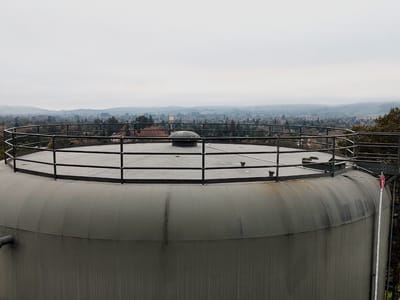
WATER TANK — PERIMETER GUARDRAILWASTEWATER · DWG PRJ-06 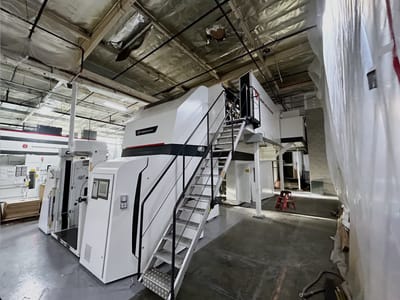
OEM EQUIPMENT INSTALL — ACCESS STAIR AND PLATFORMMANUFACTURING · LIVE PLANT · DWG PRJ-01


Service area
Nearby
Divisions
Related services
Structural Steel Fabrication and Erection
Structural and miscellaneous steel fabrication in Rancho Cordova. Platforms, mezzanines, supports, and access systems. Engineers on staff who stamp.
Industrial Equipment Installation and Integration
Industrial equipment installation inside live plants. Structural supports, rigging, utility tie-ins, and commissioning support. 600 miles from Sacramento.
In-House Rigging and Equipment Setting
Fully in-house industrial rigging. Receive, offload, stage, and set equipment with our own personnel. 600 miles from Sacramento.
Industries
Industries this work runs in
Food and Beverage Processing Equipment Installation
Food and beverage processing equipment installation inside live plants. Sanitary supports, utility tie-ins, washdown design. 600 miles from Sacramento.
Manufacturing and Assembly Line Equipment Installation
Manufacturing and assembly line equipment installation in live plants. Rigging, structural supports, utility tie-ins, commissioning support.
Wastewater Treatment Structural and Mechanical Work
Wastewater treatment contractor for structural steel, tank rehabilitation, guardrail and access systems, process piping, and equipment installation.
Portfolio
Related project work
Industrial Water Tank Structural Rehabilitation
Industrial water tank structural rehabilitation, railing and access improvements, and elevated field welding on an in-service tank.
OEM Equipment Install in a Live Plant, Zero Unplanned Downtime
OEM equipment installed inside an active manufacturing and processing facility with no extended shutdown window. No unplanned downtime occurred.
Coverage
- 600 mi
- Field services, installation, fabrication delivery, and rigging from Sacramento
- 300 mi
- Full EPC delivery and preventative-maintenance programs
- Nationwide
- Engineering, design, and fabrication for shipment
Frequently Asked Questions
Do you handle seismic detailing and the special inspection process?
Yes, and it is the reason we lead with engineering on this page. Our engineers design and detail the lateral system and connections, specify the weld procedures and filler metals including where welds are demand-critical, identify protected zones, and produce the documentation a special inspector will ask for. What we need from you early is the engineer of record's criteria and the jurisdiction, because the requirements vary and they have to be settled before fabrication rather than after. Confirm the specific requirements with your engineer of record.
Our building is a hundred years old and we want to add a mezzanine. Where do we start?
With an evaluation of what is already there, before anyone designs the mezzanine. In East Bay conversions we routinely find undocumented alterations, previous repairs done to a different standard, and existing members carrying loads nobody designed for. Our engineers assess the existing structure and the load path down to the foundation first, then design the new steel to what the building can actually accept. Skipping that step is how a project discovers a foundation scope in month three.
How do you deal with Bay Area traffic on a project schedule?
By building it into the plan instead of absorbing it as overtime. Crews leave early enough to start at the beginning of your shift, deliveries are scheduled outside commute windows, and for multi-day work we stage locally rather than commuting three hours a day. We would rather quote the realistic schedule than the optimistic one and then explain a delay.
We have almost no staging area. Can you still fabricate off site and deliver?
That constraint actually favors off-site fabrication, but it changes how the steel is broken up. On the field-verification visit we measure the truck route, the turns, the door heights, and whatever laydown space exists, then size the assemblies to arrive and be placed with the access you have. The alternative — delivering pieces that cannot reach the installation point — turns into field cutting and hand-carrying, which is slower and produces worse work.
Does Bay air change how you specify a structure?
Yes, particularly on anything exposed or near the water. Marine air accelerates corrosion at connections, base plates, anchor bolts, and any detail that traps moisture. We specify the coating system, galvanizing where it makes sense, and connection detailing for that exposure rather than reusing an inland specification. It costs more up front and it is the difference between a structure that lasts thirty years and one that needs attention in eight.
Do you work in pharmaceutical or biotech facilities?
We build the support steel, platforms, access, and enclosures around processes in facilities like these, with the understanding that the documentation and cleanliness expectations are higher than industrial norms — material traceability, weld records, surface finish specifications, and controlled site conduct. → **
Call (916) 842-7402
Send drawings, a photo, or a rough scope. We answer with questions before we answer with a number.
Miller 3 Engineering · 2530 Mercantile Dr Ste H, Rancho Cordova, CA 95742 · CA LIC #1136711