Winery Equipment Fabrication for Napa and Sonoma
Napa is 59 miles from our shop. Santa Rosa is about 97. Both are inside our full-service band, and both run on a calendar that leaves a narrow window for anyone who needs to touch a cellar.
Here is the specific problem we solve for wineries. Catalog barrel handling equipment is designed around a standard rack and a standard forklift. Your cellar has the rack spacing it has, the barrel sizes you actually use, the aisle width the building gave you, and a lift with a particular carriage and capacity that somebody bought in a different decade. Equipment that assumes otherwise either does not fit or works badly. So we build winery equipment fabrication to the geometry that exists rather than the geometry a catalog assumes.
Coverage
- 59 mi
- Shop to Napa, I-80 west then CA-12 / CA-29
- ~97 mi
- Shop to Santa Rosa and the Sonoma County cellars
- 300 mi
- Inside the full EPC and preventative-maintenance band
- 600 mi
- Field services, fabrication delivery, and rigging
What We Build for Napa and Sonoma Wineries
Custom barrel handling equipment. Handlers, racks, and transfer equipment built to your rack spacing, barrel format, aisle width, and the specific forklift carriage and capacity you own. This is the work in our portfolio that most directly matches this region.
Crush pad structural steel. Equipment supports, elevated platforms, hopper and press supports, must line supports, and the structural work that has to survive being hosed down every day for ten weeks a year and then sit idle.
The full detail
Tank platforms and cellar access. Catwalks, platforms, stairs, and access systems around tanks and above cellar space, engineered for the load and detailed so a person can actually work from them.
Sanitary and washdown-rated fabrication. Continuous welds, ground and polished seams, surfaces sloped to drain, no ledges that hold product or water. Winery cleaning is aggressive and constant, and a structure specified for a dry warehouse fails in a cellar.
Process and utility supports. Piping supports, pump skids, chiller and glycol line supports, and the steel that carries the utilities a modern cellar depends on.
Hospitality and tasting room architectural steel. This region spends real money on the visitor side, and it is a different product line: guardrail and handrail at $140–$240 per linear foot depending on type, steel deck and balcony structures from $12,000, laser-cut decorative panels and privacy screens at $55–$120 per square foot, shade sail posts, gates, and outdoor kitchen sub-structures. Engineered, stamped, and permit-ready — which matters when the structure is over a patio full of guests.
What Napa and Sonoma Actually Run On
Wine, at a scale that is easy to underestimate because the marketing is about craft. A Napa Valley Vintners economic impact study put the Napa County wine industry's contribution at roughly $11.7 billion, supporting on the order of 55,000 jobs — the substantial majority of employment in the county. Sonoma County adds more than 425 wineries across 19 recognized appellations, including the Russian River, Dry Creek, Alexander Valley, and Sonoma Valley.
Underneath the tasting rooms, this is heavy food-and-beverage process manufacturing: stainless tanks by the hundred, presses, sorting lines, pumps, glycol systems, barrel inventory in the tens of thousands, and cellars that run refrigeration year-round. The equipment problems are the same ones a cannery has, with a shorter and less forgiving season.
The full detail
The region is not only wine. Lagunitas Brewing operates in Petaluma, now its primary brewing site after the company consolidated production back to California in 2024, and Amy's Kitchen — headquartered in Petaluma — runs a food manufacturing plant in Santa Rosa. Both are organic-food and craft-beverage operations with the same sanitary design, tank access, and support-steel requirements as a winery, on a year-round production calendar rather than a harvest one.
Geographically the work spreads along a few predictable corridors: CA-29 and the Silverado Trail up the Napa Valley floor, the Carneros district across the county line, Highway 12 through Sonoma Valley, and the Russian River and Highway 101 corridor north of Santa Rosa. Cellars in this region are frequently built into hillsides or below grade, which changes access, rigging, and ventilation planning in ways a flat-slab industrial building does not.
Getting to Your Cellar
Napa is about an hour and fifteen minutes: I-80 west, then CA-12 or CA-29. Santa Rosa runs closer to two hours depending on the route and the day. Both are same-day round trips, though Sonoma County work benefits from an early start.
The route matters more here than the mileage. Traffic through the Carquinez corridor and across CA-37 is genuinely unpredictable, and harvest adds farm equipment and truck traffic to two-lane valley roads. We build that into schedules rather than discovering it — a crew that has to be on a crush pad before the first delivery of the day leaves early enough to absorb an hour of it.
Access is the other planning item. Hillside and cave cellars, narrow estate driveways, and low door heights mean the truck that carries the steel is sometimes not the truck that can reach the building. We measure the approach, not just the installation point, on the field-verification visit.
Two Constraints That Decide Your Schedule
Crush. From roughly August through October, nothing happens in a working cellar that is not making wine. Fruit is arriving, the press is running, tanks are filling, and there is no version of the year with less tolerance for a contractor. Everything else compresses into the remaining months, with the added rule that the work has to be finished, cleaned, and proven before the first fruit shows up — a crush pad that is not ready on the first delivery day is a crop problem, not a construction problem.
Practically: scope during crush while the bottlenecks are visible, engineer over the winter, fabricate and install in late winter and spring, commission with margin before summer. The operations that get the schedule they want are the ones that identify the problem while it is actively annoying them, not the ones that remember it in June.
Fire season, and the power that goes with it. This region has lived through the 2017 Tubbs Fire and the 2020 Glass Fire — the latter alone damaged or destroyed more than eighteen wineries — and the practical effects on a project are real: seasonal access restrictions, evacuation windows that shut a site down with no notice, insurance and hot-work permitting that tighten as conditions dry out, and PG&E Public Safety Power Shutoffs that can take a site's power down for a day or more during exactly the late-summer and fall period when crush is running. Hot work — welding, cutting, grinding — is the specific exposure. Late in the season, that work may need to move indoors, move earlier in the day, or move to another month. We plan hot work against the calendar and the conditions rather than treating it as always-available. Confirm current requirements with your county fire authority for your site.
Published 2026 Budget Pricing
We publish our numbers. Nobody else in this market does. Custom barrel handling and process equipment is quoted per project; the ranges below cover the structural, access, and hospitality scope.
| Item | 2026 budget range |
|---|---|
| Standard steel handrail, 2-line | $140–$185 per linear foot |
| Guardrail system, 42" OSHA | $165–$225 per linear foot |
| ADA-compliant rail | $180–$240 per linear foot |
| Commercial deck frame, steel structure | $25,000–$75,000+ |
| Laser-cut decorative panels | $55–$95 per square foot |
| Laser-cut privacy screens | $75–$120 per square foot |
| Shade sail posts, single and multi-post | $1,200–$18,000+ |
| Fixed ladder, 20–30 ft | $3,500–$7,500 |
Fabrication only. Final pricing moves with material selection, structural requirements, engineering review, finish type, complexity of fabrication, and project scope and quantity. Installation is quoted after a site visit and field review. See the full 2026 price guide →
Related Work
Custom barrel handler → — Barrel handling equipment built to a specific cellar's rack geometry, barrel format, and forklift. The closest match in our portfolio to what this region needs, and the reason we wrote this page.
Wrap-around deck and balcony → — Engineered and stamped steel deck and balcony structure. Relevant to the hospitality side: tasting room decks, elevated terraces, and guest structures that need a stamp and a permit.
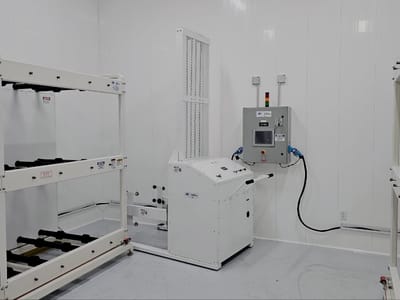
BARREL HANDLER — INSTALLEDBREWERIES & WINERIES · DWG PRJ-05 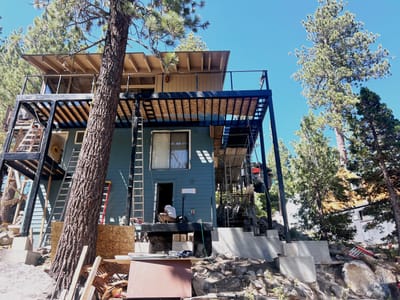
WRAP-AROUND DECK — STRUCTURE COMPLETEARCHITECTURAL STEEL · DWG PRJ-08


Divisions
Related services
Custom Processing Equipment Design and Build
Custom processing equipment, skid systems, and automated material handling. Sanitary washdown design, PLC-ready. Engineers and fabricators under one roof.
Structural Steel Fabrication and Erection
Structural and miscellaneous steel fabrication in Rancho Cordova. Platforms, mezzanines, supports, and access systems. Engineers on staff who stamp.
Utility Tie-Ins and Process Piping
Process utility piping, industrial plumbing, secondary containment, air and environmental systems. Bundled with a project or contracted standalone.
Industries
Industries this work runs in
Brewery and Winery Equipment Installation
Winery and brewery equipment installation: tanks, presses, conveyance, barrel handling, platforms, and utility tie-ins. 600 miles from Sacramento.
Food and Beverage Processing Equipment Installation
Food and beverage processing equipment installation inside live plants. Sanitary supports, utility tie-ins, washdown design. 600 miles from Sacramento.
Portfolio
Related project work
Custom Barrel Handler for Winery Operations
Purpose-built barrel handling equipment designed and fabricated for winery operations. Custom equipment from engineers and fabricators under one roof.
Wrap-Around Steel Deck and Balcony
A multi-face steel deck and balcony structure fabricated and installed. Architectural steel with the same engineering discipline as the industrial work.
Coverage
- 600 mi
- Field services, installation, fabrication delivery, and rigging from Sacramento
- 300 mi
- Full EPC delivery and preventative-maintenance programs
- Nationwide
- Engineering, design, and fabrication for shipment
Frequently Asked Questions
Can you build a barrel handler for our specific racks and forklift?
That is the normal request, not a special one. We need your rack spacing and height, the barrel format, your aisle width, and the make, carriage, and capacity of the lift that will actually use it. Off-the-shelf handlers assume a standard rack and a standard truck; if either of yours is non-standard — and in older cellars one usually is — the catalog unit either does not fit or works badly enough that operators stop using it.
When in the year can you work in our cellar?
Realistically, November through June, with the hard rule that anything touching the crush pad or the production line must be finished and proven before the first fruit arrives. During crush, from roughly August through October, we stay out of working areas. What we will do during crush is come measure, scope, and plan — that is the best time to see what the actual bottleneck is, and it means engineering can run over the winter instead of starting in February.
Our cellar is built into a hillside. Does that change anything?
Yes, and mostly for access and rigging rather than for the steel itself. Below-grade and cave cellars mean restricted door heights, tight turns, limited crane positioning, ventilation considerations for hot work, and sometimes an approach road the delivery truck cannot use. On the field-verification visit we measure the route in as well as the installation point, so the fabricated assembly is sized to arrive rather than sized only to fit.
How does fire season affect a project here?
It mainly affects hot work and site access. Welding, cutting, and grinding get tighter permitting and sometimes get restricted outright as conditions dry out, evacuation orders can close a site with no notice, and PG&E Public Safety Power Shutoffs can remove site power for a day or more in late summer and fall. We schedule hot work against the season rather than assuming it is always available, and we would rather move a cutting operation indoors or into a different month than argue with a fire authority. Confirm the current requirements for your site with your county fire authority.
Do you also do the tasting room side, or only production equipment?
Both, and it is one of the reasons this region suits us. The hospitality side is engineered architectural steel — guardrail, ADA rail, deck and balcony structures, decorative and privacy panels, shade sail posts, gates — and it needs stamped drawings and permits because it sits under guests. Our engineers design, draft, and stamp it and pull permits where the jurisdiction requires them, and the budget ranges are published above so you can scope it before asking for a quote.
Do you work with breweries and food plants in the region too?
Yes. Lagunitas in Petaluma and Amy's Kitchen in Santa Rosa are examples of the other side of this region's process manufacturing — named here as market context, not as customers. The technical requirements overlap heavily with winery work: sanitary and washdown design, tank platforms and access, glycol and utility supports, and support steel threaded into a building that was not laid out for the current equipment. The main difference is the calendar, since year-round production means shorter, more frequent windows instead of one long off-season.
Call (916) 842-7402
Send drawings, a photo, or a rough scope. We answer with questions before we answer with a number.
Miller 3 Engineering · 2530 Mercantile Dr Ste H, Rancho Cordova, CA 95742 · CA LIC #1136711