Industrial Contractor Services in Stockton, California
Stockton is 48 miles from our shop, about fifty minutes down Highway 99 or I-5. There is a detail about this city that matters more to a steel fabricator than the drive time: most of the imported steel used in Northern California comes through the Port of Stockton. A good share of the material we buy has already been to your town before we ever cut it.
That is not a marketing coincidence, it is a supply chain. Stockton is a deep-water port about seventy-five nautical miles inland from the Golden Gate, with a 35-foot channel that takes vessels up to 900 feet, and it is where cement, fertilizer, and structural steel enter the region. For a Stockton facility, the practical consequence is that material lead times on a project here are usually the shortest of any metro we serve outside Sacramento itself.
Coverage
- 48 mi
- Rancho Cordova shop to Stockton, Highway 99 or I-5
- ~50 min
- Drive time, one way
- 300 mi
- Inside the full EPC and preventative-maintenance band
- 600 mi
- Field services, fabrication delivery, and rigging
What We Build for Stockton Facilities
Heavy structural steel. Beams, columns, transfer towers, conveyor supports, equipment platforms, and the support structures that handle bulk material. Port-adjacent and warehouse work runs heavier than typical commercial fabrication, and the connections have to be designed for it.
Marine-adjacent and corrosion-exposed steel. Structures that live in brackish air and wet ground need a different specification than the same structure inland — galvanizing, coating systems, connection detailing, and sacrificial thickness all get decided differently. We spec for the environment rather than the drawing template.
The full detail
Tank and vessel structural work. Access platforms, ladders, cages, and structural rehabilitation on water and process tanks, including the kind of rehabilitation where the tank has to stay in service.
Warehouse and distribution steel. Mezzanines, dock and access steel, safety guarding, bollards, column protection, and the guardrail that keeps a forklift out of a rack line.
Food and ag processing equipment. Custom processing equipment, sanitary and washdown-rated enclosures, dust collection, and support steel for the canneries, walnut and almond handlers, and beverage operations across San Joaquin County.
What Stockton Actually Moves and Makes
The Port of Stockton is the anchor of the local industrial economy and one of only two inland deep-water ports in California. It carries 7.7 million square feet of warehousing across more than a hundred businesses, hosts multiple active cement import terminals, and handles the majority of the region's imported steel. Much of the port sits on Rough and Ready Island, the former naval facility transferred to port control — which means large parcels, heavy slabs, rail access, and buildings that were built to military rather than commercial standards.
Around the port, San Joaquin County runs one of the densest agricultural processing and distribution economies in the state. Walnuts, almonds, cherries, asparagus, wine grapes, milk, and tomatoes all move through local hullers, packers, canneries, and cold storage. The I-5 and Highway 99 corridors through Stockton, Lathrop, and Tracy have become one of the West Coast's primary large-format distribution markets, and the buildings going up there are full of mezzanines, guarding, and dock steel.
The full detail
University of the Pacific — chartered in 1851 and California's oldest chartered university — anchors the city's institutional side, with the campus facilities, lab, and utility infrastructure that goes with a 170-year-old institution.
The industrial building stock is the thing an out-of-town contractor underestimates. Stockton has been an industrial city since the Gold Rush made it the inland supply point for the southern mines. Plenty of the plants here were built before 1950, expanded in the 1960s and 1970s, and re-tenanted several times since. The steel in them is riveted in places. The drawings, where they exist, describe a building that no longer exists.
Getting to Your Stockton Plant
48 miles, either Highway 99 or I-5, about fifty minutes each way outside commute traffic. That is a comfortable day trip in both directions, which means Stockton gets treated much more like Sacramento than like Fresno: we can field-verify, come back with a template, and iterate without a hotel or a mobilization line item.
Stockton also pairs naturally with other runs. Modesto is 27 miles further south, Elk Grove is on the way back, and Tracy and Lathrop are a short detour off I-5. A crew heading to Fresno passes through. When we have several Central Valley jobs open, Stockton is usually the stop that gets folded in for free.
For shutdown work, the fifty-minute drive means a night crew can start at the beginning of the window rather than spending the first hour of it arriving.
Two Stockton Constraints Worth Planning Around
The ground is not what you would like it to be. Stockton sits in the Sacramento–San Joaquin Delta on soft alluvial soils with a high water table, much of it behind levees and some of it at or near sea level. Three consequences for steel work. Anchorage into an old slab is a question mark until somebody actually cores it — nominal embedment depth is a guess when the slab is thin, unreinforced, or sitting on fill. Column footings for anything heavy frequently want piles rather than spread footings, which changes the schedule and the budget more than the steel does. And brackish groundwater accelerates corrosion at the base of every column and post, so base plates, anchor bolts, and the bottom eighteen inches of a bollard or rail post need a coating specification that inland work does not. We field-verify anchorage conditions before quoting anything that has to be fastened down.
Pre-war structures, post-war expansions, and no reliable drawings. In older Stockton plants we expect riveted connections, undocumented reinforcement, previous repairs done to a different standard, and at least one structural member carrying a load nobody designed it for. This is not a reason to avoid the work; it is a reason to price the field verification honestly and do it first. Retrofitting new equipment into a 1940s structure often means the existing steel needs evaluation before the new steel can be designed — and that is an engineering question, which is why having engineers in the same building as the shop matters here.
One thing we are not going to repeat on this page: Stockton falls under the San Joaquin Valley Air Pollution Control District, the same agency that governs Fresno, with the same advance-notice and dust-control-plan requirements for earthmoving. Those thresholds are laid out on our Fresno page, and they apply here too.
Published 2026 Budget Pricing
We publish our numbers. These are Northern California fabrication-only budget ranges.
| Item | 2026 budget range |
|---|---|
| Heavy industrial steel mezzanine | $35,000–$75,000+ |
| Light-duty steel mezzanine | $18,000–$35,000 |
| Guardrail system, 42" OSHA | $165–$225 per linear foot |
| Fixed ladder, 20–30 ft | $3,500–$7,500 |
| Standard steel bollards | $450–$850 each |
| Removable or locking bollards | $1,500–$3,500 each |
| Mechanical or generator enclosure | $8,000–$25,000+ |
Fabrication only. Final pricing moves with material selection, structural requirements, engineering review, finish type, complexity of fabrication, and project scope and quantity. Installation is quoted after a site visit and field review. See the full 2026 price guide →
Related Work
Water tank structural rehabilitation → — Structural rehabilitation on a tank, including the access and platform steel. Directly relevant to Stockton's water, wastewater, and process-tank inventory, and to any structure carrying corrosion exposure.
OEM equipment install, live plant → — Prefabricated structural and access steel, equipment set with our own rigging crew, utilities tied in, handed over ready for commissioning. On schedule, zero unplanned downtime.
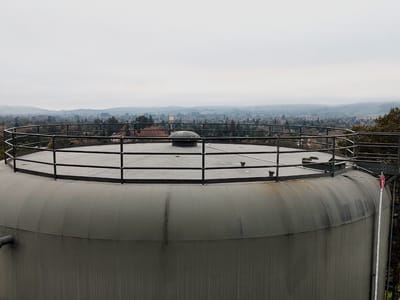
WATER TANK — PERIMETER GUARDRAILWASTEWATER · DWG PRJ-06 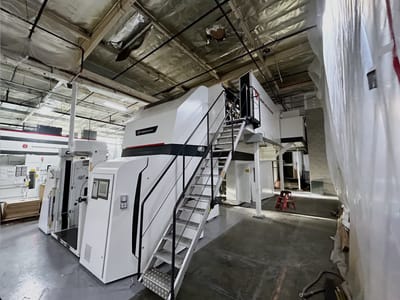
OEM EQUIPMENT INSTALL — ACCESS STAIR AND PLATFORMMANUFACTURING · LIVE PLANT · DWG PRJ-01


Service area
Nearby
Divisions
Related services
Structural Steel Fabrication and Erection
Structural and miscellaneous steel fabrication in Rancho Cordova. Platforms, mezzanines, supports, and access systems. Engineers on staff who stamp.
In-House Rigging and Equipment Setting
Fully in-house industrial rigging. Receive, offload, stage, and set equipment with our own personnel. 600 miles from Sacramento.
Industrial Equipment Installation and Integration
Industrial equipment installation inside live plants. Structural supports, rigging, utility tie-ins, and commissioning support. 600 miles from Sacramento.
Industries
Industries this work runs in
Food and Beverage Processing Equipment Installation
Food and beverage processing equipment installation inside live plants. Sanitary supports, utility tie-ins, washdown design. 600 miles from Sacramento.
Wastewater Treatment Structural and Mechanical Work
Wastewater treatment contractor for structural steel, tank rehabilitation, guardrail and access systems, process piping, and equipment installation.
Portfolio
Related project work
Industrial Water Tank Structural Rehabilitation
Industrial water tank structural rehabilitation, railing and access improvements, and elevated field welding on an in-service tank.
OEM Equipment Install in a Live Plant, Zero Unplanned Downtime
OEM equipment installed inside an active manufacturing and processing facility with no extended shutdown window. No unplanned downtime occurred.
Coverage
- 600 mi
- Field services, installation, fabrication delivery, and rigging from Sacramento
- 300 mi
- Full EPC delivery and preventative-maintenance programs
- Nationwide
- Engineering, design, and fabrication for shipment
Frequently Asked Questions
Does the Port of Stockton actually change anything for us as a customer?
For material lead time, yes. Most of the imported structural steel used in Northern California enters through your port, and two of the region's four cement import terminals are there. When a Stockton project needs a section that is not sitting on our rack, the odds are better than average that it is available regionally and quickly. It also means heavy material can be delivered to a Stockton site without a long inland haul, which shows up in freight rather than in the fabrication line.
Our plant was built in the 1940s and we cannot find drawings. Can you still work on it?
That is a normal Stockton project, not an obstacle. We field-verify the existing structure — member sizes, connection types, previous repairs, actual clearances — and our engineers evaluate whether the existing steel can carry what you want to add before anything new gets designed. Expect that verification to cost some hours up front. It costs far less than fabricating to a drawing set that describes a building three tenants ago.
Do you spec differently for Delta humidity and groundwater?
Yes, and it matters most at the bottom of things. Brackish groundwater and persistent moisture attack base plates, anchor bolts, and the lower portion of columns, posts, and bollards well before the rest of the structure shows anything. For Stockton work we specify the coating system and the connection detailing for that exposure — galvanizing where it makes sense, coating build where it does not — and we treat anchorage into an old, wet slab as something to verify by coring rather than assume from a nominal depth.
Can you handle foundation and pile work, or only the steel?
Send us the scope and we will tell you plainly what is ours and what needs another trade. Soft Delta soils mean heavy equipment frequently needs piles rather than spread footings, and that is a different specialty with its own licensing. What we will not do is quote around it and leave you to discover the foundation scope after the steel arrives. We would rather scope it correctly at the start, including the parts we hand off.
Will you pair a Stockton visit with our Modesto or Tracy site?
Routinely, and it usually saves you money. Modesto is 27 miles further down 99, Tracy and Lathrop are a short detour off I-5, and Elk Grove is on the way home. If you have multiple facilities in the corridor, tell us all of them when you call — we schedule the run rather than the individual stop, and mobilization gets spread across the sites instead of billed to each one.
Call (916) 842-7402
Send drawings, a photo, or a rough scope. We answer with questions before we answer with a number.
Miller 3 Engineering · 2530 Mercantile Dr Ste H, Rancho Cordova, CA 95742 · CA LIC #1136711